Tape-In vs. Keratin Bond Extensions: Which Method Is Right for Your Client?
SBSapphira Beauty Academy · October 10, 2026 · 5 min read
One of the most common questions I get from stylists building out their extension services is this: Should I offer tape-ins or keratin bonds? My answer is always the same — both, eventually. But the smarter question is: which method is right for this client, sitting in your chair, right now?
Getting that answer right protects the integrity of your client's hair, sets realistic expectations, and builds the kind of trust that turns a one-time appointment into a long-term extensions relationship. Let's break it down.
What You're Actually Working With
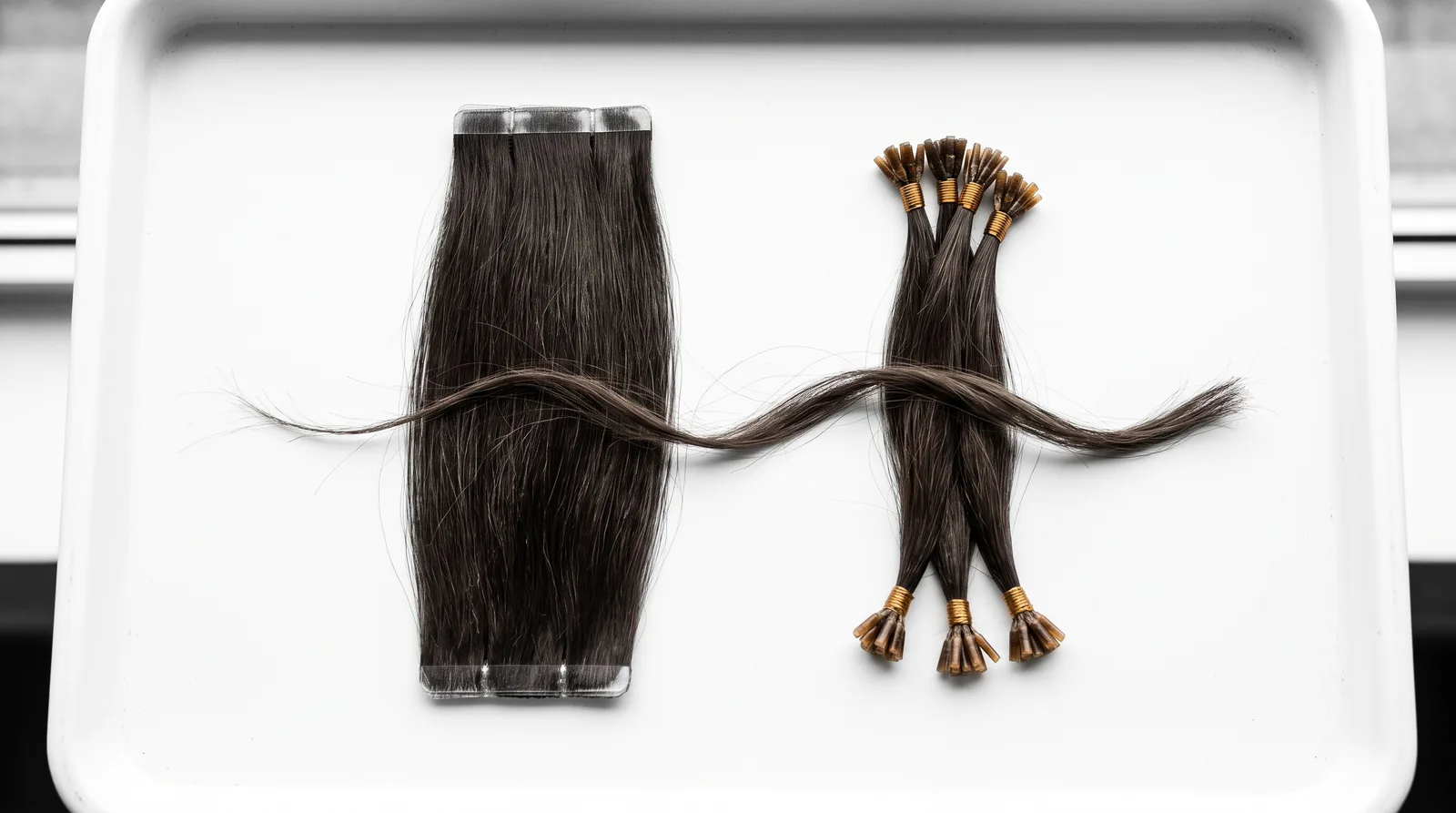
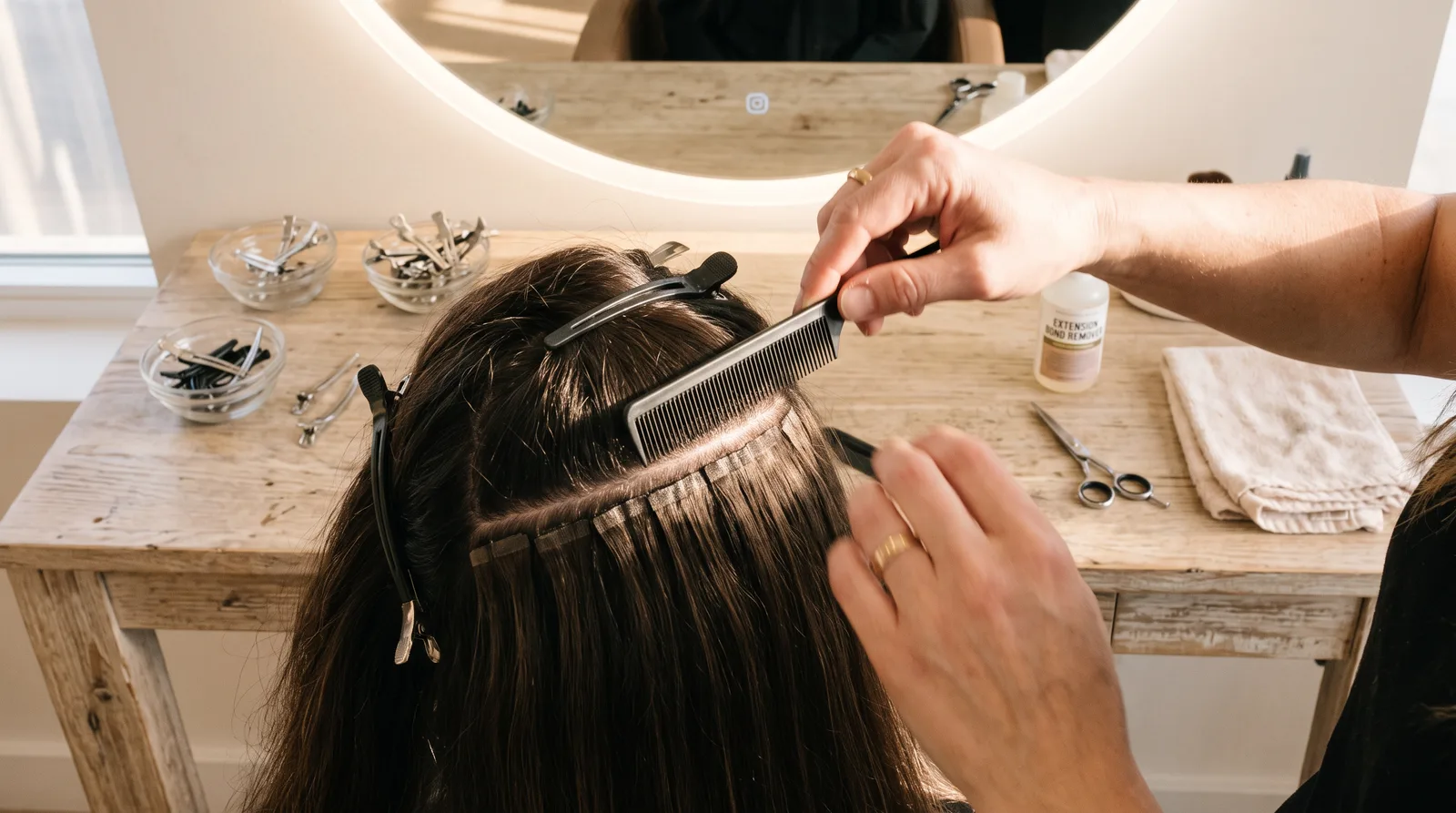
Tape-in extensions come in pre-taped wefts — typically about 1.5 inches wide — that sandwich a thin section of the client's natural hair between two pieces. They lie flat against the head, making them one of the most seamless, low-profile options available.
Keratin bond extensions (also called fusion or hot-fusion extensions) use individual strands tipped with a keratin protein bond that a heat tool melts and molds around a small section of natural hair. Each strand is placed one by one, which means significantly more customization — and significantly more time in the chair.
Neither method is universally better. They solve different problems for different clients.
Application: Time, Skill, and Setup
Tape-ins are relatively fast — a full head can typically be installed in one to two hours. The tools are minimal: a tail comb, sectioning clips, and a flat iron or bond sealer. The learning curve is real, but the workflow becomes efficient quickly.
Keratin bonds are a longer commitment — full installations can run three to five hours or more depending on the density of the look. You'll need a quality fusion iron with temperature control, and your sectioning has to be precise. The upside is that you're placing each bond individually, which gives you full creative control over placement, density, and direction.
The bottom line: Tape-ins are faster and more accessible for newer extension stylists. Keratin bonds reward advanced technique with higher customization and premium pricing.
Longevity and Maintenance
Tape-ins typically last six to eight weeks before they need to be moved up. The tape adhesive weakens over time and with product buildup, so clients need to come back in regularly — which is great for your retention numbers.
Keratin bonds hold for three to five months with proper care. They don't require move-up appointments in the same way, but they do require removal with a bond-dissolving solution and careful technique to protect the natural hair underneath.
What this means for pricing: Tape-ins may have a lower upfront install cost, but clients are back in your chair every six to eight weeks. Keratin bonds carry a higher install price — justified by time and longevity — and a separate removal fee when it's time to take them out.
Ideal Hair Types for Each Method
This is where I see stylists make the most mistakes — matching the wrong method to the wrong hair.
Tape-ins work best for:
- Fine to medium hair that needs added length and volume without heavy attachment points
- Clients who wear their hair down or in simple styles most of the time
- Anyone who wants a lower-commitment introduction to extensions
Keratin bonds work best for:
- Medium to thick hair that can support the weight of individual bonds
- Clients who love high ponytails, updos, and versatile styling — individual bonds disappear into the hair more easily than wefts
- Clients who want a longer wear period and don't mind the higher upfront investment
One firm rule for both methods: Neither is ideal for severely damaged, over-processed, or very thin hair. Extensions add weight, and fragile hair cannot support that without risk. Your consultation is non-negotiable.
The Maintenance Conversation You Have to Have
No method succeeds without client education. Before any installation, cover these:
- Sulfate-free, extension-safe shampoo is non-optional — sulfates break down adhesive bonds and tape faster than anything
- Tape-in clients need to avoid oil-based products near the roots — they destroy the tape bond
- Keratin bond clients need to be careful with heat near the bond points — excessive heat can soften and shift the bonds
- Sleeping in a loose braid or silk bonnet protects both methods from tangling and friction damage overnight
The more specific you are in the consultation, the fewer panicked texts you get two weeks post-install.
How to Make the Call
When a client sits down for a consultation, ask yourself three things:
- What is her hair's current condition and density? Fine or damaged hair narrows your options fast.
- How does she style her hair daily? Updos and ponytails favor bonds. Wear-it-down clients do great with tape-ins.
- What's her maintenance appetite and budget? Tape-ins require more frequent appointments; bonds require a larger upfront spend.
Run through those three filters and the right method usually makes itself obvious. When it doesn't, tape-ins are almost always the safer starting point — they're easier to remove, less risky on the hair, and give you and your client a chance to learn how she responds to extensions before committing to a longer-wear method.
The goal isn't to upsell. It's to make sure every client leaves with hair that looks incredible, holds up, and brings her back to your chair.
That's how you build an extensions business that lasts.
Want to go deeper than a blog post?
The Extension Suite
Master every professional hair extension installation method — from tape-ins and keratin bonds to wefts and braided bases — so you can serve more clients, charge premium prices, and build a thriving extensions business.
Start learning — $59/mo